Driveway Extension, Widening and Parking Pads in Northeast Ohio
A driveway extension adds concrete beside, behind or at the end of the slab you already have, so a second car, a work truck or a trailer has somewhere to sit off the street. In Northeast Ohio the hard part is rarely the new concrete itself; it is joining new to old so the seam stays level through years of frost and clay movement. LocalConcreteDriveway connects you with independent local contractors who quote widening and parking pad work at no cost to you.
What counts as a driveway extension?
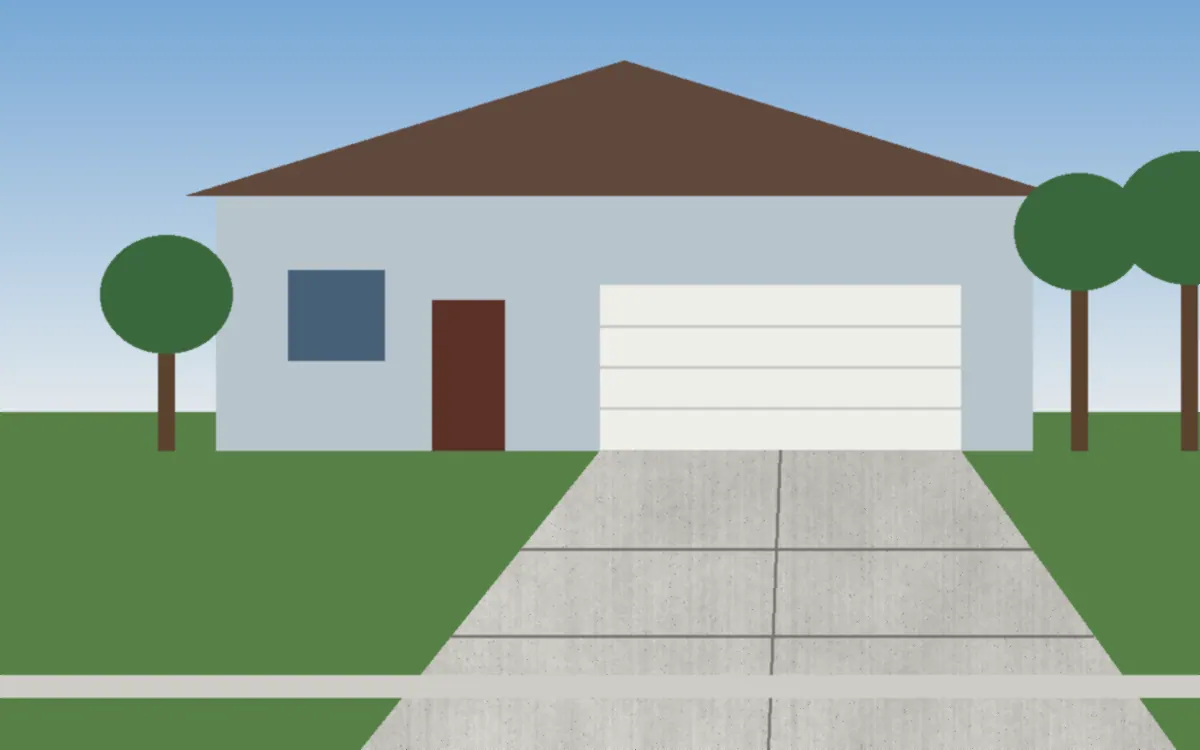
Homeowners use the word for several different jobs. Widening a single-lane drive into a double, adding a side pad next to the garage for a boat or camper, stretching the drive back to a detached garage, and pouring a turnaround so you are not backing onto a busy road all fall under the same heading.
Each of those has a different shape, a different amount of digging and a different way of meeting the existing slab. A contractor will usually want to see the property before quoting, because a pad that looks simple on paper can run into a downspout, a gas meter, a tree root or a property line once someone walks the ground.
Some requests are really a hybrid: widening the front half where cars park and leaving the narrow section near the street alone. That approach keeps the apron and right-of-way untouched, which can simplify the permit question in some towns.
- Widening a one-car drive to two cars side by side
- A parking pad beside the garage for an RV, boat or trailer
- Extending the drive to reach a rear or detached garage
- A turnaround or hammerhead so you can pull out forward
- A small pad for trash cans, a basketball hoop or a shed approach
| Item | Typical range |
|---|---|
| Plain broom finish, unreinforcedCleveland area, published guide (HomeBlue) | $6-$11 / sq ft |
| Plain broom finish, reinforcedCleveland area, published guide (HomeBlue) | $7-$12 / sq ft |
| Removing existing concrete if neededPlus possible disposal fees | $1-$2 / sq ft extra |
Typical ranges from published cost guides. Contractor quotes vary with your site.
How do contractors tie new concrete into an old driveway?
The usual method is to drill into the edge of the existing slab and epoxy short steel dowels into it, then pour the new section around them. The dowels keep the two pieces from shifting up and down against each other, which is what creates a trip edge or a snowplow catch after a few winters.
Some contractors prefer a simple isolation joint with a strip of expansion material between old and new, letting the two slabs move independently. That can work well on firm ground, but on heavy clay soil a free-floating pad may settle or heave at a different rate than the original drive.
Ask each contractor which method they plan to use and why. There is not one correct answer for every lot, but you should hear a reason tied to your soil, the age of the old slab and how the extension will be used.
Will a driveway extension match my existing concrete?
Honestly, new concrete almost never matches old concrete on day one. Fresh gray is lighter and cleaner, while a slab that has been through ten Ohio winters has picked up salt etching, tire marks and a weathered surface texture.
The difference fades over a few seasons as the new section weathers, but it rarely disappears completely. If a perfect match matters to you, some homeowners choose to resurface or seal the whole driveway once the extension has cured so the color and sheen read as one surface.
Another option is to make the contrast deliberate. A border, a band of exposed aggregate or a stamped pad beside a plain driveway can look intentional rather than patched, and a contractor can show you what has worked on similar homes.

How thick should a parking pad for an RV or trailer be?
For ordinary cars, a 4-inch slab over a compacted crushed-stone base is the common baseline. A pad meant for a camper, a loaded trailer, a boat on a tandem axle or a contractor's work truck generally calls for 5 to 6 inches, and many pros will add rebar or welded wire mesh in that area.
The base matters as much as the concrete. In much of Northeast Ohio the native soil is clay that holds water, so contractors commonly place 4 to 6 inches of compacted 304 limestone and go deeper where the ground is soft or wet.
Tell the contractor the heaviest thing that will ever park on the pad, including trailer tongue weight and outriggers. A pad sized only for a sedan can crack under a 30-foot camper that sits in one spot all winter.
- 4 inches is typical for passenger cars and light SUVs
- 5 to 6 inches is common for RVs, boats, trailers and work trucks
- Air-entrained concrete around 4,000 psi is widely specified for outdoor slabs here
- Control joints keep cracks in straight lines instead of random patterns
Do I need a permit to widen my driveway in Northeast Ohio?
Many cities and villages in the region regulate how wide a driveway can be, how much of a front yard can be paved, how close it can come to a side lot line and whether a parking pad can sit in front of the house. Rules vary a great deal from one community to the next, and some suburbs are much stricter about front-yard parking than others.
If your widening touches the apron or the curb cut at the street, you are almost certainly working in the public right-of-way, and that commonly requires its own permit. Homeowner associations may also have their own approval process on top of the city's.
Before signing anything, call your city or village building department, describe the extension and ask what is required. Many contractors will pull the permit for you, but confirm in writing who is responsible for it.
How much does a driveway extension cost in the Cleveland area?
Published guides for the Cleveland area put plain broom-finish concrete at roughly $6 to $11 per square foot without reinforcement and about $7 to $12 with it. Those figures are a reasonable starting point for an extension, but small jobs often price higher per square foot because the contractor still has to mobilize a crew, set forms and order a truck.
Several things push an extension quote up or down: how much digging and grading is needed, whether lawn, landscaping or an old walk has to be removed, how far the truck can reach, whether a concrete pump is needed for a backyard pad, and how much reinforcement the contractor recommends for heavy vehicles.
Those per-foot ranges come from published cost guides, not from LocalConcreteDriveway, and real quotes depend on site conditions. The surest number is a written quote from a contractor who has seen your property.
When should I extend instead of replacing the whole driveway?
An extension makes sense when the existing slab is level, mostly intact and only showing normal hairline cracks. Adding new concrete beside a sound driveway is far less disruptive than tearing everything out.
If the old drive is badly heaved, sunken toward the garage, scaled across most of its surface or broken into loose pieces, pinning new concrete to it can lock in those problems. In that situation many homeowners find it smarter to replace and widen at the same time, so the whole surface shares one base, one grade and one finish.
A contractor can also tell you whether part of the old slab is worth saving. Sometimes the front half is fine and only the section near the garage needs to go, which can be combined with the widening.
How LocalConcreteDriveway helps with extension projects
We are a free matching service, not a concrete company. You tell us what you want to add, roughly how big it is and where you live, and we pass the request to independent contractors in Cuyahoga, Lorain, Medina, Summit, Lake, Geauga or Portage County who handle this kind of work.
Each contractor sets their own price, schedule and warranty, and you deal with them directly. You are never obligated to hire anyone, and when more than one contractor covers your area you can compare quotes side by side.
Contractors pay us to receive project requests, so the service costs homeowners nothing. Spring and early summer calendars fill up quickly here, so starting the conversation in late winter gives you the widest choice of dates.
Read before you get quotes

Concrete Driveway Cost Calculator
Estimate your concrete driveway cost in Northeast Ohio. Enter your size and finish to see a planning range based on published 2024-2026 cost guides.
Read
Driveway Permits in Northeast Ohio: What Homeowners Should Know
Why many Northeast Ohio cities require permits for driveway aprons and right-of-way work, who usually pulls the permit, and what to ask your building department.
Read
How Thick Should a Concrete Driveway Be?
How thick should a concrete driveway be? Slab thickness for cars, trucks, RVs and aprons, plus base depth on Northeast Ohio clay, explained in plain terms.
ReadFrequently asked questions
Can new concrete be poured right against my old driveway?
Yes. Most contractors either drill and epoxy steel dowels into the old edge or install an isolation joint between the two slabs. Which one fits depends on your soil, the condition of the existing concrete and how the area will be used.
How wide should a two-car driveway be?
Many homeowners aim for somewhere around 18 to 24 feet so both doors can open without stepping onto grass. Your city may cap driveway width or front-yard paving, so check local rules before settling on a size.
Can I park an RV on a standard 4-inch extension?
It is not recommended for regular use. Pads meant for campers, boats or heavy trailers are commonly poured 5 to 6 inches thick over a deeper compacted base, often with steel reinforcement.
Will the new section crack where it meets the old one?
The joint between old and new is a planned break, so a line there is expected. What you want to avoid is the two sides moving up or down against each other, which dowels and a well-compacted base help prevent.
Does a driveway widening need a permit?
Often it does, especially if it changes the curb cut or apron, or adds paving in a front yard. Requirements differ by community, so confirm with your city or village building department before work starts.
Can I widen just the top of the driveway near the garage?
Yes, and it is a common request. Flaring the drive out near the garage gives you two-car parking without changing the narrow section near the street or touching the public right-of-way.
Should I seal the extension and the old driveway together?
Once the new concrete has cured for the period the contractor or sealer manufacturer recommends, sealing both at once can help the surfaces look more uniform. It also protects the new slab before its first full winter of road salt.
Does LocalConcreteDriveway charge me for quotes?
No. Homeowners never pay us anything. The contractors in our network pay to receive project requests, and you are free to decline every quote.
Ready to price your driveway?
One short form. Local contractors who serve your town follow up to see the job and quote. Free, no obligation.